
(2022)
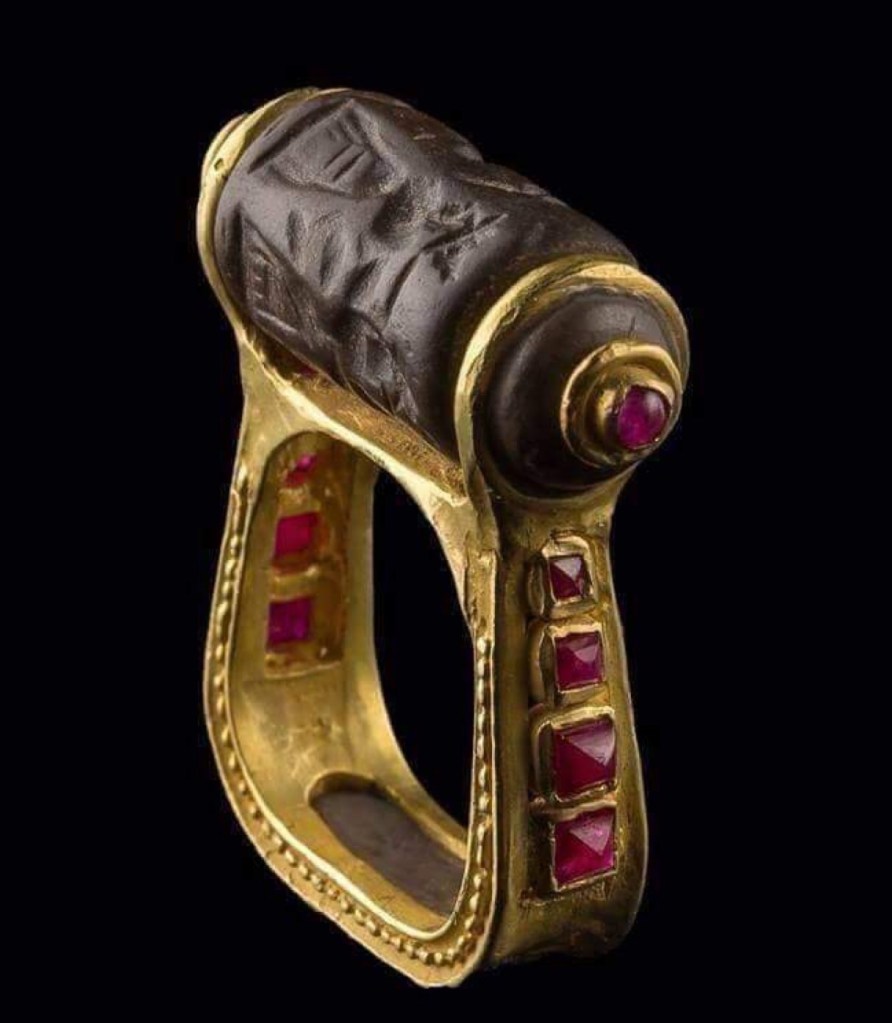
A lovely tool for a long vanished Mesopotamian technology, to impress cuneiform signatures onto clay cylinder seals, typically to authenticate legal documents such as contracts, receipts (as in a receipt for a shipment), deeds, wills and like that. Which is how far back paperwork goes, to the dawn of civilization. Except that it wasn’t paper yet. It was clay tablets, at the beginning, baked hard and stored in archives (which also go back to the dawn of civilization) and surviving thousands of years. Upwards of a couple million of such documents have been found, mostly perfectly dull receipts and the like, and there might be millions of such documents still buried in the sands of Mesopotamia. This is what writing was invented for, not story telling or poetry. Before literature was ever even imagined there were a couple thousand years of receipts, and pretty baubles like this to sign them with.
From Archaeohistories on Twitter:
Gold Ring with Cuneiform Inscriptions, found from Uruk (3500 BC).
Cylinder seals were invented 3500 BC, in the Near East at contemporary site of Susa in southwestern Iran, and at the early site of Uruk in Southern Mesopotamia. They were used as an administrative tool, jewelry or magical amulet.
The seal itself was usually made of hard stone, glass or ceramics such as Egyptian faience. As the alluvial country of Mesopotamia lacks good stone for carving, the stones for early seals were probably imported from Iran.
British Museum
 Brick's History