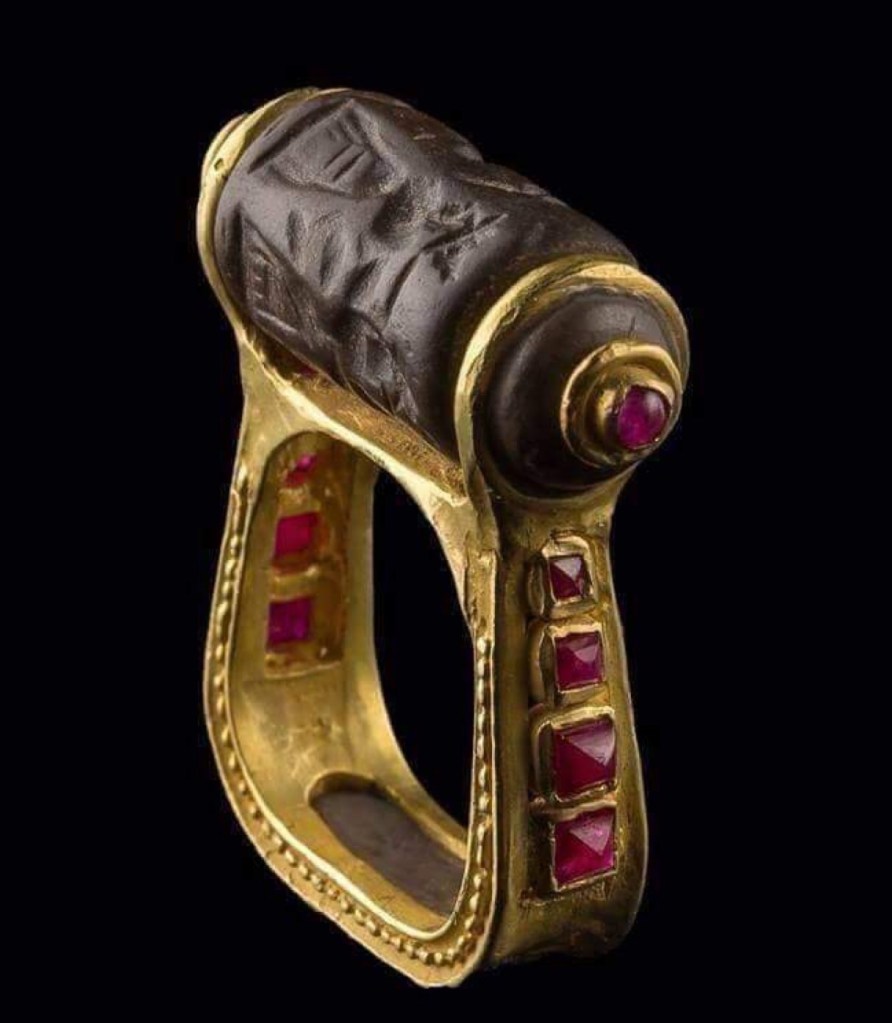
Cylinder seal

(2022)

A lovely tool for a long vanished Mesopotamian technology, to impress cuneiform signatures onto clay cylinder seals, typically to authenticate legal documents such as contracts, receipts (as in a receipt for a shipment), deeds, wills and like that. Which is how far back paperwork goes, to the dawn of civilization. Except that it wasn’t paper yet. It was clay tablets, at the beginning, baked hard and stored in archives (which also go back to the dawn of civilization) and surviving thousands of years. Upwards of a couple million of such documents have been found, mostly perfectly dull receipts and the like, and there might be millions of such documents still buried in the sands of Mesopotamia. This is what writing was invented for, not story telling or poetry. Before literature was ever even imagined there were a couple thousand years of receipts, and pretty baubles like this to sign them with.

From Archaeohistories on Twitter:

Gold Ring with Cuneiform Inscriptions, found from Uruk (3500 BC).
Cylinder seals were invented 3500 BC, in the Near East at contemporary site of Susa in southwestern Iran, and at the early site of Uruk in Southern Mesopotamia. They were used as an administrative tool, jewelry or magical amulet.
The seal itself was usually made of hard stone, glass or ceramics such as Egyptian faience. As the alluvial country of Mesopotamia lacks good stone for carving, the stones for early seals were probably imported from Iran.

British Museum
About all those missing words….

Sorry there’s no more of the great gobs of prose I used to spill out all over these blogs. People have been asking. Alas, epilepsy was really fucking with the long essays, a d I finally had to stop. Had to stop working too. Had to stop just about everything. It’s been a couple years now and the synapses have calmed down nicely. They seem to like being bored. Me not so much at first but I’ve adapted. So I write tiny little essays now, scarcely ever longer than a paragraph. Hence all this tinyness where vastness used to be. Little gems, I tell myself. The actual gemage might be debatable, but they’re my blogs. You can think everything you do is art if no one is editing you.

Anyway, thanks for reading and feel free to complain.

Brick

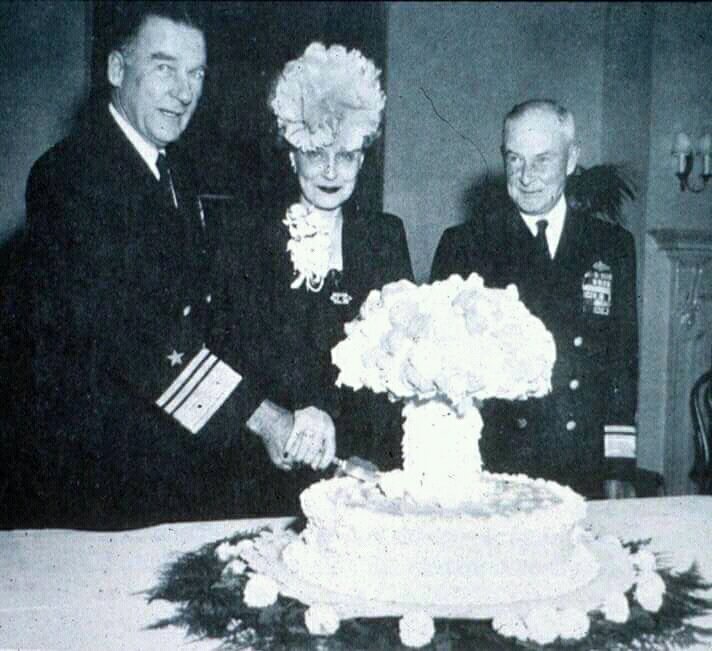
Atom bomb cake

An atom bomb cake? Is this the single weirdest tackiest photo of 1946? Hiroshima and Nagasaki had barely stopped sizzling. The victims were still dying. Sheesh.

Then again, from the perspective of the US military the bombs saved a couple hundred thousand US and several million Japanese lives that would otherwise have been lost in the invasion of Japan. Well, the second bomb saved them. Hiroshima was obliterated for no reason at all because it did not shake the Emperor’s intention to have his entire civilization to go up in a blaze of fire and suicide. That was the plan. The emperor’s subjects certainly had done so thus far. Japanese soldiers had fought to the death and Japanese civilians had committed mass suicide in every action against Americans in 1944-45, and unlike Germany, the resistance and fanaticism increased and not decreased as the US closed in on the homeland. Japanese flyers joined in, dying in mass kamikaze attacks. The last of the Japanese fleet was sunk in a suicide sortie, the world’s biggest battleship going down with nearly all hands, a 70,000 ton kamikaze. Now Japan itself was on the verge of a final act of national nihilism that Hitler, deep in his bunker, could only have dreamed about.

Then we obliterated Nagasaki and the Emperor woke up to reality. Instantly the war was over. Several hundred thousand American soldiers went home and there was a glut of unused coffins, whole warehouses full. In Japan, the cities smouldered and two radiated but the countryside was as untouched by war as America’s. Weird the fortunes of war.

So perhaps this mushroom cloud cake that strikes me as incredibly callous now was really just a tacky sigh of relief. As memories of the prospects of invading Japan faded (along with memories of Japan’s genocidal war crimes) people became increasingly aware of what happened to the poor people in Hiroshima and Nagasaki. We remember what actually happened instead of what might have happened. Decades living under the threat of world wide nuclear annihilation certainly altered perspectives. But it took us a while to get to this state of consciousness. Indeed, there was a time there in the late 1940’s when people looked on the atomic bomb as some sort of war ending peace assuring wonder weapon. There was even a weird stretch there where people seemed enamoured of mushroom clouds, in cakes, in Vegas, in song. “I’ve been to Nagasaki,” Wanda Jackson sang, “Hiroshima too/What I did to them/I can do to you!”

It’s like the whole damn planet had PTSD after the War. Maybe everyone was nuts. And I wonder if that mushroom cloud cake was chocolate. I’d eat a piece of chocolate atomic bomb cake. Or a piece of chocolate global warming cake or chocolate invariably fatal pandemic cake or any kind of post apocalyptic chocolate cake. It’s not like it’s the end of the world.